
Note that as there are 2Y1 and 2Y2 versions, follow the link for your controller, above.
There's just one model, but with options: The basic DIY 2Y2 gives you
wideband functionality (digital and analog wideband, data collection, etc.).
Add the 1Mb ($25) non-volatile plug-in one megabyte memory module
for on-board storage and data collection without the need for a PC.
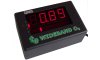
Add the Dis ($20) on-board four digit LED display module for simple on-board wideband AFR/Lambda monitoring.
There is also the LD02B external LED display you can use with the 2Y2 unit - this is a smallish display that can be easily located away from the larger 2Y2 main unit.
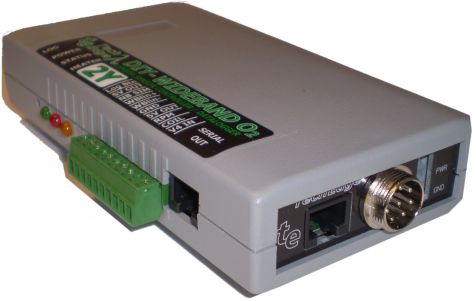 The 2Y DIY kit, introduced in 2008,
and building on the success of the original 2A0 DIY kit from 2003
is an economical Tech Edge wideband unit in
Do-It-Yourself form. Like all Tech Edge wideband units,
the 2Y drives the LSU sensor correctly, giving you the longest possible sensor life.
Easy to assemble, with some pre-built and tested modules, 2Y units have 100%
professional appearance and performance.
More info below.
The 2Y DIY kit, introduced in 2008,
and building on the success of the original 2A0 DIY kit from 2003
is an economical Tech Edge wideband unit in
Do-It-Yourself form. Like all Tech Edge wideband units,
the 2Y drives the LSU sensor correctly, giving you the longest possible sensor life.
Easy to assemble, with some pre-built and tested modules, 2Y units have 100%
professional appearance and performance.
More info below.
Tech Edge does not offer the 2Y series in a pre-built and tested form
(it is too expensive for us to build in through-hole compared to newer surface mount formats).
If you want a low-cost unit but don't want to build it yourself, then please
look at the 2J economy controller, or the 2C professional controller.
Please also note that the 2Y is strictly DIY - we will NOT get your unit going if it doesn't work,
but it does come with pre-tested working modules that makes it easy to assemble.
Buy the 2Y2 DIY Kit (+ options), Cable, Connector, Display and Sensor

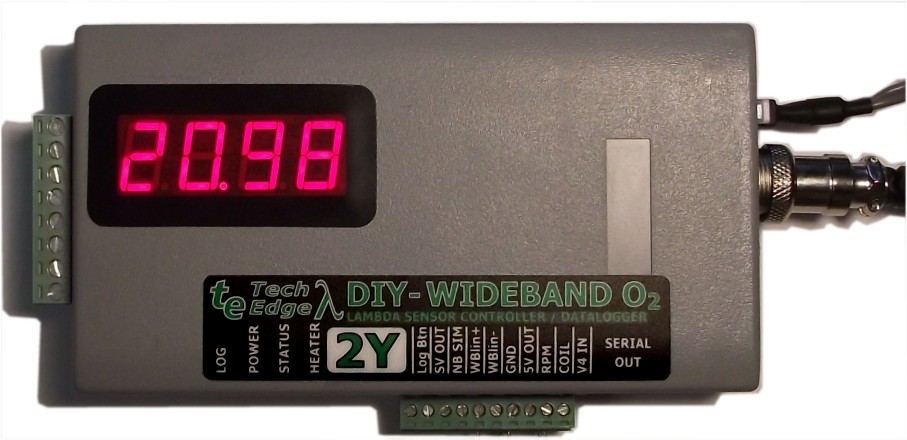 Note: The 2Y2 is now available -
it is a 2Y1 with a slightly modified PCB that allows you to build it with an optional
inbuilt 4-digit display (the 2Y1 never offered this option).
Note: The 2Y2 is now available -
it is a 2Y1 with a slightly modified PCB that allows you to build it with an optional
inbuilt 4-digit display (the 2Y1 never offered this option).
Because we like giving you options, the basic 2Y2 kit comes without
a controller-to-sensor cable, and you must also add the actual wideband sensor too.
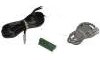
DIY cable kits include the circular 8-pin connector (that plugs into the 2Y2 unit)
but not the harness connector (which mates with the sensor).
The harness connector must match the sensor (eg: LSU-4.2 or LSU-4.9).
The newer Bosch LSU-4.9 sensor is recommended even if you have previously used the LSU-4.2 sensor and have one available.
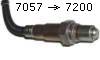
The readily available Bosch LSU-4.2 (7057 & 7200) sensors both use the same connector [CNK7057].
The newer Bosch LSU-4.9 sensors (17123 & 17023) both use a smaller connector [CNK17025].
Normally we sell only one LSU-4.2 variant and one LSU-4.9 variant depending on the prices we can get them for
- but note that their lead lengths are not all the same (more info here).
| 
| 
| 
| 
|
| DIY WBo2 kit | Cable Length | sensor connector kit | DIY Display | with Sensor |
Total price of selected item(s) : quantity : ...
Pre-Built Modules Simplify AssemblyA feature of the 2Y controller is the use of a pre-built lambda module. The module is constructed with SMD (Surface Mount Devices) components and comes factory tested. It makes construction simpler and the chance of success much higher than the original DIY 2A0. )
The SMD lambda module is readily replaced but our experience with SMD construction suggests that this will be the last item to cause problems. The lambda module includes a 2-position jumper to select either the Bosch LSU or NTK families of wideband sensors (the firmware must be changed if the sensor family is changed). Please note that there is presently no firmware available for NTK sensors, but such firmware could be made available, should there be sufficient market demand. Another 2-position jumper selects between LSU-4.2 (which includes the LSU-4.0 sensor) and the newer LSU 4.9 sensors. Again, the firmware must be changed. )
The jumpers are located on the underside of the lambda module. The lambda module is unplugged, by unscrewing two M3 screws, to change the position of these jumpers. The image at right is the optional logger module which holds 1 megabyte of non-volatile flash memory — enough for around 30 minutes of logging at 10 samples/second rates. The logger module includes an onboard activity LED to aid in quickly identifying problems. Faulty modules can be swapped for a factory replacement without sending the entire 2Y unit in for repair. Click on the image to enlarge it. |
)
Easy to Assemble, Fewer ComponentsHere are two more views of the unit showing the pre-built lambda module and the place for the logger module connector (on the main PCB, at lower right of the lambda module, on the illustration at left). There is a label, logger module on the main PCB. The unpopulated area at one end of the main PCB is for a display option that is now unable to be offered in the 2Y series. Note the lower component count compared with the 2A0 (image). )
The 2Y kits come (optionally) with DIY cable kits. The current cable kits are lower cost and better quality than older cable kits — they use a one-piece cable we have especially manufactured for us. A correctly-built cable will greatly enhance the durability and reliability of your 2Y unit. This is backed up by our finding that up to 80 percent of problems with DIY kits was due to problems with the cable. |
)
2Y User ManualGo here for the 2Y2 User Manual page. At right is shown the 2Y1 with the pre-built lambda module removed. The enlarged image (click the image) clearly shows the components under the module. Note the two nylon standoffs that hold two corners of the lambda module. Equally notable is the relatively small number of components visible in this image of an assembled 2Y1 main PCB in its case. The logger module is not installed, but the position for its connector is clearly visible. |
We update 2Y documentation from time-to-time in response to your feedback (see footer below).